
Moyes’ Post-Match Words After Everton’s Tottenham Draw Have Fans Talking
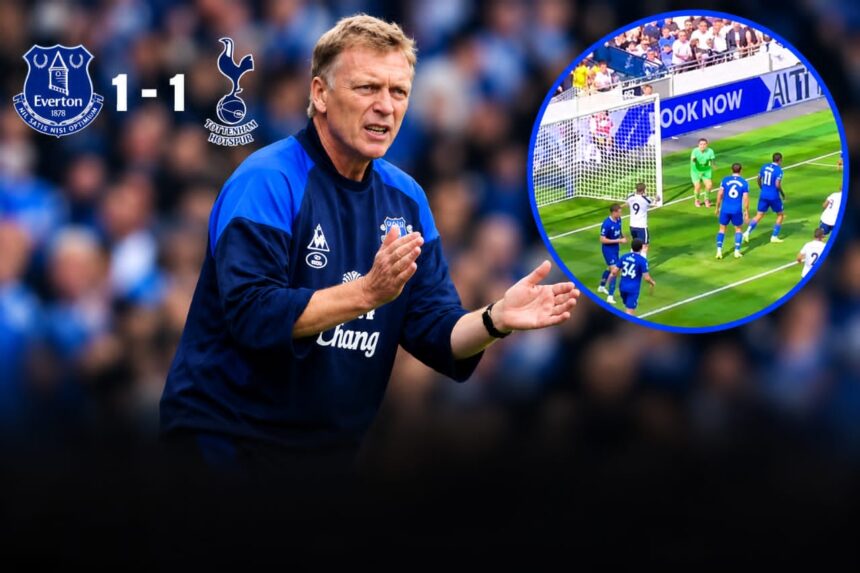
David Moyes’ post-match assessment of Everton’s 0-0 draw at Tottenham Hotspur has sparked significant discussion among supporters, blending characteristic honesty with a clear appreciation for the defensive resilience that earned a valuable point on the road.
The Everton manager did not hide his disappointment with the overall performance. Speaking after the final whistle at the Tottenham Hotspur Stadium, Moyes delivered a verdict that was typically direct.
“Was I happy with the performance? Not really, no. I wanted much more from the team, but I told them about coming here – we’ve not had a great record here,” he said. “It was only a couple months ago we stopped getting to Europe, probably, by not winning here as well so I generally felt that we had to come in and show a bit more, we had to be resilient and tough.
“Tottenham were so good for 20 minutes. They put us under so much pressure and we found it difficult to escape from it. But look, we were worthy, we made a couple of chances, but we didn’t play well enough today when we had the ball. We gave it away, turned it over more often than we have done recently.”
Those words have resonated because they refuse to dress up a hard-fought point as something it was not. Everton arrived in north London unbeaten and left with their record intact, yet Moyes made clear that the manner of the display fell short of the standards he expects. The admission that his side “didn’t play well enough with the ball” and surrendered possession too cheaply has been widely shared and debated by fans who appreciate the lack of spin.
At the same time, Moyes was careful to highlight the qualities that secured the result. The clean sheet, only the latest in a solid defensive run, drew particular praise.
“The clean sheet was huge for the team and for everybody,” he said. “There was a wee bit of Everton DNA, we have to find ways, we have a terrific goalkeeper, a back four that does well. We were forced into it by Tottenham. I thought we did a really good job of being resilient, hard to score against. Our goalie didn’t have too many saves to make, we had a few blocks, a few corners we had to defend, but overall I thought we did a pretty good job.”
The phrase “a wee bit of Everton DNA” has already become a talking point. For many supporters it captures something essential about the club under Moyes: the ability to dig in, to frustrate more technically gifted opponents, and to leave with something from difficult away venues. Jordan Pickford was relatively untroubled, while the defensive unit, marshalled impressively by Jarrad Branthwaite and Vitalii Mykolenko, limited Tottenham to very little clear-cut quality despite long periods of home possession.
Moyes singled out both defenders for specific praise in follow-up comments, describing Branthwaite as excellent and noting that the young centre-back still has “far more to come.” The endorsement of Branthwaite, combined with the broader defensive satisfaction, has reassured fans that the foundations of the side remain strong even on days when the attacking play lacks fluency.
The context of the fixture adds weight to Moyes’ mixed assessment. Everton’s historical record at Tottenham is poor, and the memory of missing out on European qualification in part because of results in this part of London remains fresh. Approaching the game with a mindset of resilience was therefore deliberate. That the players delivered the required defensive steel while falling short in possession explains the dual nature of the manager’s verdict: frustration with the football, satisfaction with the point and the character.
Tottenham, for their part, extended a concerning start to the season. Still without a Premier League goal after four matches, they dominated the ball for long spells but lacked the cutting edge to break Everton down. The home crowd’s frustration was audible, and the final whistle was met with boos. In that environment, Everton’s ability to remain organised and dangerous on the counter carried extra value.
Moyes’ comments also touched on the practical realities of the squad. With a relatively limited group and key creative players still finding full rhythm, there will be matches in which control is hard to establish and the priority becomes staying in the contest. The manager acknowledged that such days are not the ideal, yet insisted the team must be capable of winning points in different ways. The “Everton DNA” line speaks to that adaptability.
Fan reaction has been largely measured and reflective. Many have welcomed the honesty. In an age when managers sometimes default to vague positivity, Moyes’ willingness to say he wanted more resonates with a support base that values straight talking. Others have focused on the defensive positives and the unbeaten start, arguing that four matches without defeat represents a solid platform regardless of the aesthetic. A smaller section has expressed concern that the lack of control in possession could become a recurring issue against stronger sides, and that the attacking output needs to improve if Everton are to climb the table rather than simply stay competitive.
The draw leaves Everton in a respectable position early in the campaign. More importantly, it continues a pattern of gathering points even when not at their fluent best. Under Moyes, the side has repeatedly shown the capacity to grind out results. The challenge now is to marry that resilience with greater quality and composure when they have the ball.
Looking ahead, the fixture list will continue to test the squad’s depth and adaptability. Moyes has already spoken about the need for competition in midfield and the importance of players seizing their opportunities. The return to fuller availability of creative options, including Jack Grealish’s growing influence after coming off the bench at Tottenham, should help address the possession issues identified after the Spurs game.
For the moment, the talking point remains the manager’s post-match words. They were neither triumphalist nor overly critical. They recognised the value of a clean sheet and a point at a difficult venue while refusing to pretend the performance was good enough. In doing so, Moyes struck a tone that many Evertonians recognise and respect.
“We know exactly where we’re short and what we could do better,” he said. That self-awareness, paired with the defensive steel that has become a hallmark of his teams, forms the basis of the early-season story. Fans will continue to debate the balance between the two. What is clear is that Moyes’ assessment has given them plenty to discuss as the campaign gathers pace.
The point at Tottenham was hard-earned and useful. The performance, by the manager’s own admission, left room for significant improvement. Both truths can exist at once. In acknowledging them openly, David Moyes has once again demonstrated the straightforward style that continues to define his second spell in charge. Everton supporters, long accustomed to that style, are talking about it for good reason.