

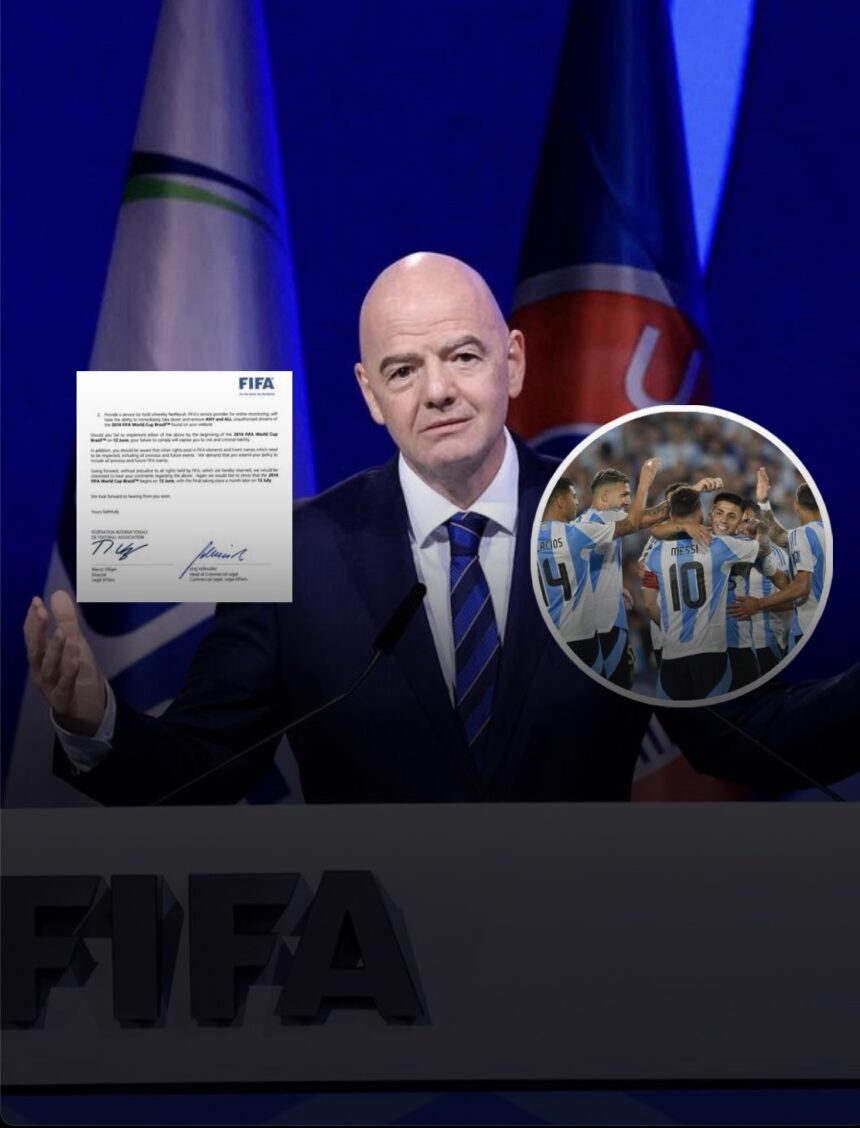
FIFA closes 2026 World Cup controversies as Argentina goes unpunished with surprising reason in official statement
FIFA has moved to close one of the biggest controversies surrounding the 2026 World Cup, confirming that its integrity review found no suspicious betting activity across the tournament and, crucially, no evidence of match-fixing.
The announcement will come as a significant development for Argentina, who have been at the centre of intense debate throughout the competition. While questions have been raised by supporters and critics over refereeing decisions, controversial moments and the treatment of the South American champions, FIFA’s official integrity review has not found evidence that would justify punishment against Argentina or any other participating nation on match-fixing grounds.
That is the key reason Argentina has effectively gone unpunished in the controversy now dominating football discussions.
It is not because FIFA has declared every incident involving Argentina acceptable. It is because the specific integrity review that has now been completed found no suspicious betting patterns connected to the 2026 World Cup matches.
FIFA’s Integrity Task Force reviewed betting activity throughout the tournament before concluding that there was no evidence of match manipulation. The findings were released after the competition, providing the governing body with the opportunity to address growing speculation about whether certain matches or decisions had been influenced by factors outside football.
For Argentina, the outcome represents an important distinction.
The team may have attracted controversy, but controversy itself is not evidence of corruption or match-fixing.
FIFA’s official position changes the conversation
The 2026 World Cup was one of the most closely scrutinised tournaments in football history.
The expanded 48-team format produced 104 matches, creating an enormous number of potential talking points for supporters, analysts and betting markets. Every major decision was analysed almost immediately, while social media amplified claims about refereeing, tournament pathways and perceived favouritism.
Argentina’s involvement made the debate even more intense.
The reigning champions entered the tournament as one of the world’s most closely followed teams. Lionel Messi’s presence added enormous global attention, while the country’s success under Lionel Scaloni meant that every decision involving the Albiceleste attracted scrutiny.
By the time Argentina reached the latter stages of the competition, online discussions had moved beyond ordinary football debate.
Questions were being asked about whether the team had received favourable treatment.
That is precisely where FIFA’s integrity statement becomes significant.
The governing body’s review did not find evidence of suspicious betting activity across the tournament. In practical terms, that means FIFA has found no basis to claim that matches were manipulated for betting purposes.
For Argentina, that removes one of the most serious allegations that could have emerged from the controversy.
The difference between “people thought something was suspicious” and “FIFA found evidence of wrongdoing” is enormous.
The official investigation has now drawn a clear line between the two.
Why Argentina has escaped punishment
The reason Argentina has not been punished is therefore relatively straightforward.
There has been no established finding of match-fixing.
There is also an important distinction between FIFA’s integrity investigation and disciplinary investigations into individual incidents.
A footballer can be investigated for misconduct without a match being manipulated. A team can be criticised for sportsmanship without being guilty of corruption. A referee can make a controversial decision without the result being fixed.
These are separate issues.
That separation is particularly important in Argentina’s case.
The team was involved in several controversial moments during the tournament, and there has been criticism from supporters in Britain and elsewhere. But unless FIFA can establish a specific breach of its disciplinary or integrity regulations, there is no automatic basis for removing points, overturning results or imposing a tournament-wide punishment.
The official integrity review has therefore provided Argentina with a significant degree of protection from the most damaging accusations.
The conclusion is not necessarily that every controversy was imaginary.
It is that FIFA has not found evidence connecting those controversies to match manipulation.
That is why the Albiceleste have emerged from the investigation without punishment on integrity grounds.
The timeline behind the controversy
The story developed over several stages during and after the tournament.
1. Argentina’s campaign attracts scrutiny
Argentina entered the World Cup under enormous pressure as defending champions and one of the tournament favourites.
The presence of Messi ensured that global attention followed almost every match.
As the tournament progressed, disputed decisions and contentious moments generated discussion among fans, particularly online.
2. The controversy grows
With Argentina advancing deep into the competition, accusations of favouritism began to spread across social media.
Some supporters questioned whether the team had benefited from decisions that would have attracted stronger criticism had they involved another nation.
However, social-media speculation does not constitute evidence.
3. Betting and integrity concerns become part of the debate
The conversation eventually moved beyond refereeing and sporting decisions.
Questions about whether suspicious betting activity existed around World Cup matches increased the pressure on FIFA to explain what its integrity monitoring systems had detected.
This was the point at which the issue became much more serious.
4. FIFA’s Integrity Task Force reviews the tournament
FIFA’s integrity officials examined betting patterns and information connected with matches played during the World Cup.
The purpose was to identify potential signs of manipulation or irregular betting activity.
5. FIFA announces its findings
The governing body subsequently confirmed that its review had found no suspicious betting activity across the 2026 World Cup.
That finding effectively closes the match-fixing element of the controversy.
It also means Argentina cannot be punished simply because supporters remain unhappy about decisions or incidents from the tournament.
What this means tactically and competitively for Argentina
From a football perspective, the integrity controversy should not obscure Argentina’s performance.
Scaloni’s team remained one of the most tactically mature sides in international football.
Their success has been based on flexibility rather than one rigid formation.
Argentina can build with a back four, alter their midfield structure depending on the opponent and use different pressing triggers depending on the match state.
That tactical intelligence has been one of the defining characteristics of the Scaloni era.
The team also understands tournament football.
Argentina’s players have experience of managing the emotional demands of knockout matches, protecting narrow leads and adapting to opponents who attempt to disrupt their rhythm.
Those qualities inevitably contribute to their reputation as a difficult team to beat.
But that same competitive edge can also fuel controversy.
When a team plays with intensity and emotion, incidents are more likely to attract attention.
The challenge for Argentina is ensuring that its competitive identity remains within the boundaries of the regulations.
FIFA’s integrity statement does not remove that responsibility.
It simply confirms that there is no evidence of match manipulation.
UK fans are still divided over the decision
The reaction in Britain has been more complicated.
For many English supporters, Argentina’s presence at the centre of the controversy is difficult to separate from the country’s semi-final victory over England.
The rivalry between the two nations has historical and sporting roots that stretch back decades, and the 2026 World Cup added another chapter.
Some England supporters believe FIFA should have investigated more aggressively.
Others argue that football fans must accept the findings of the governing body’s integrity process unless credible evidence emerges to contradict them.
That second position is particularly important.
It is entirely reasonable to question refereeing decisions.
It is also reasonable to demand transparency from FIFA.
But there is a significant difference between asking questions and accusing a national team of wrongdoing without evidence.
The official statement gives Argentina an important defence.
The tournament may have produced controversial moments, but FIFA’s integrity review did not uncover evidence of match-fixing.
That is a fact supporters have to consider, regardless of which team they support.
The Nigerian perspective: why this matters beyond Argentina
The issue also resonates with football supporters in Nigeria.
Nigerian fans have historically been among the most passionate followers of international football, and the country’s supporters regularly debate the fairness of FIFA competitions.
For many African football fans, the larger question is whether FIFA applies its standards consistently.
Whenever a major football nation becomes involved in controversy, supporters across Africa often ask whether the same circumstances would be handled differently if the country had less influence or global attention.
That is why FIFA’s official integrity statement is important.
A transparent investigation is preferable to speculation.
If FIFA says its Integrity Task Force found no suspicious betting activity, then that should carry weight.
At the same time, supporters should continue to demand transparency whenever controversies arise.
The lesson for Nigerian football is particularly relevant.
African football has experienced genuine match-fixing controversies at different levels of the game, making integrity monitoring essential. FIFA’s ability to investigate major tournaments and publish clear conclusions is therefore important for the credibility of the sport.
Argentina’s case should not be used as proof of favouritism without evidence.
Instead, it should demonstrate why independent integrity monitoring matters.
The bigger question: has FIFA really closed the controversy?
In one sense, yes.
FIFA has closed the match-fixing and suspicious betting aspect of the 2026 World Cup controversy by confirming that its integrity review found no evidence of wrongdoing.
But that does not mean every debate surrounding Argentina has disappeared.
Football supporters can still question individual refereeing decisions.
They can still debate whether certain disciplinary incidents deserved stronger action.
They can still criticise the behaviour of players and officials.
What FIFA’s statement does is establish a boundary.
There is no evidence from the integrity investigation that the tournament was manipulated.
That is a significant conclusion.
It means the debate must now return to the football itself and to legitimate disciplinary questions rather than unproven claims of corruption.
For Argentina, the immediate consequence is clear: they will not face punishment simply because their World Cup campaign generated controversy.
The Albiceleste can now move forward knowing that FIFA’s integrity process has not established any wrongdoing connected to match manipulation.
What happens next?
The most important thing now is whether FIFA maintains the same standard of transparency in future tournaments.
Football has changed dramatically.
The betting industry is larger, social media is faster and supporters are more suspicious of controversial decisions than ever before.
That means governing bodies cannot simply dismiss concerns.
They must investigate them.
But investigations must also be respected when they produce findings that supporters may not like.
In Argentina’s case, FIFA’s conclusion is clear enough: the integrity review found no suspicious betting activity across the 2026 World Cup.
That is why Argentina has gone unpunished on the most serious allegation surrounding the tournament.
The story is not that FIFA ignored the controversy.
The story is that FIFA investigated the integrity concerns and found no evidence that justified punishment.
For UK fans, Nigerian supporters and football followers around the world, that distinction matters.
Argentina’s reputation will continue to generate debate, particularly given the intensity of the country’s recent success.
But accusations must ultimately be tested against evidence.
FIFA’s official statement has now provided that evidence.
And for Argentina, the result is a clean bill of health from the tournament’s integrity review.
The controversy may continue in the court of public opinion, but as far as FIFA’s investigation into suspicious betting and match manipulation is concerned, the case is effectively closed.