
Jude Bellingham Breaks Silence on Thomas Tuchel — His Message After England’s World Cup Heartbreak Says It All
In the high-stakes pressure cooker of the 2026 FIFA World Cup, few relationships have drawn as much scrutiny, analysis, and speculation as that between England midfielder Jude Bellingham and head coach Thomas Tuchel. What began as a complex dynamic marked by tough love, public friction, and eventual mutual respect reached a defining flashpoint during the tournament’s knockout stages. Bellingham’s pointed responses to his manager’s criticism after a hard-fought quarter-final victory, followed by his raw and reflective words in the aftermath of a devastating semi-final exit, have crystallised the emotional and competitive intensity that defined England’s campaign. His message after the heartbreak against Argentina, in particular, has resonated far beyond the pitch, encapsulating pride, regret, resilience, and a defiant belief in future success.
England’s journey through the 2026 tournament in North America was a rollercoaster of resilience, individual brilliance, and collective near-misses. Under Tuchel, appointed as Gareth Southgate’s successor with a mandate to deliver silverware, the Three Lions navigated a demanding path. Bellingham emerged as the standout performer, scoring six goals across the tournament and frequently producing match-winning contributions. His brace against Mexico in the round of 16 and another double against Norway in the quarter-finals propelled England into the last four for the fourth time in recent major tournaments. Yet the ultimate prize remained elusive. A late collapse against Argentina in the semi-final in Atlanta ended dreams of a first men’s World Cup final since 1966, leaving players, staff, and a nation reeling.
The most public collision between Bellingham and Tuchel occurred not after the exit, but in the immediate aftermath of the 2-1 extra-time quarter-final win over Norway in Miami. The conditions were punishing—extreme heat and humidity equivalent to around 44°C felt temperature—against a talented Norwegian side featuring Erling Haaland, Martin Ødegaard, Antonio Nusa, and Alexander Sørloth. England fell behind, equalised through Bellingham just before half-time (a goal that carried a degree of controversy), and eventually prevailed through another Bellingham strike in extra time. The result was celebrated as a hard-earned progression to the semi-finals. Tuchel, however, was far from satisfied.
In his post-match interviews, the German coach described the performance as “sloppy,” citing technical mistakes, a lack of speed and repetition, and a sense that England had made life difficult for themselves. He acknowledged the fantastic result and the team’s place in the final four, while emphasising that he was “not happy with the performance in every sense.” Commitment was not in question, but the quality of the display left him unconvinced. “We were lucky today,” he stated, a phrase that would prove particularly inflammatory.
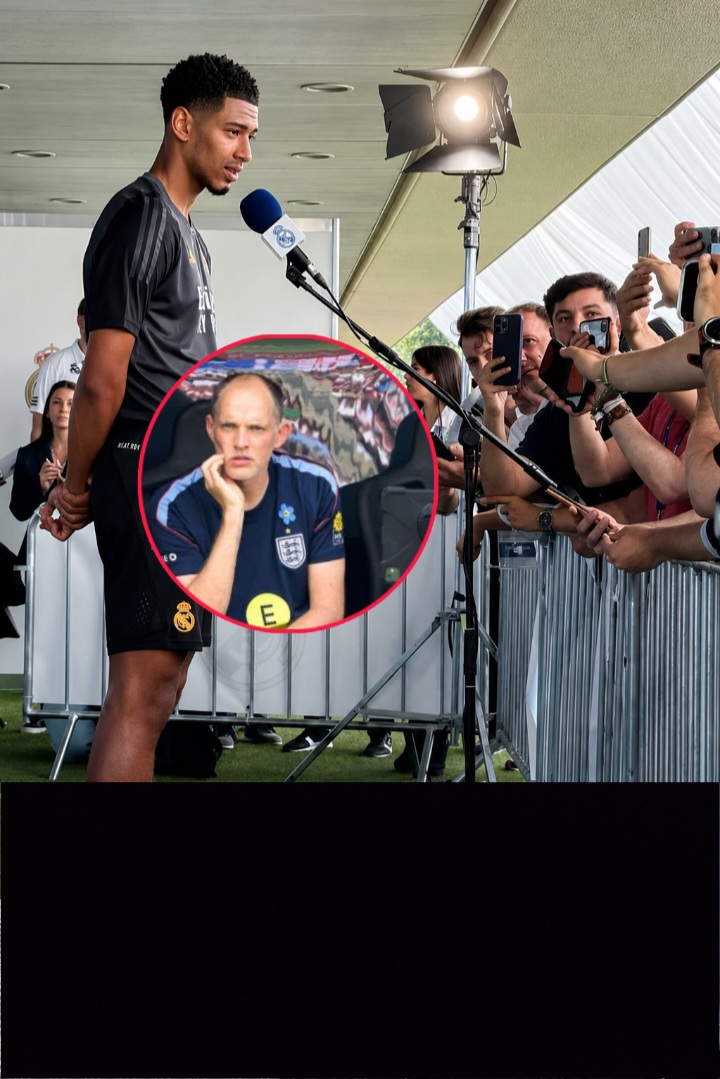
When these comments were relayed to Bellingham—still drained from 120 minutes of intense football, having scored both goals and been named man of the match—the midfielder’s reaction was immediate and unfiltered. In one interview, he responded with a dismissive “Yeah, well… whatever. Whatever.” He continued: “It’s difficult out there. It’s a tough shift. All the players are putting in a tough shift. So my thoughts and appreciation go to the players who put in a good shift out there.” Pressed further, Bellingham sharpened his critique. “Maybe [it shows the standards he expects], or maybe he doesn’t know what it’s like to play in those kinds of conditions against Erling Haaland, Odegaard, Nusa, Sørloth. That’s not an easy team to play against.” He stressed the positive environment the squad had worked to create and the need to maintain it into the final four. “You’re not going to win every game popping the ball and making 1,000 passes. Sometimes you have to win dirty and we did that again tonight.” Asked whether he agreed England had been lucky, Bellingham offered a curt “No comment.”
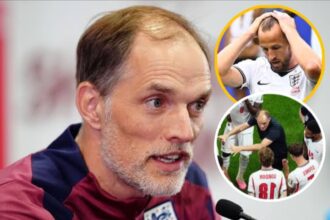
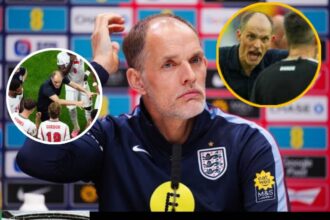
These remarks, delivered with body language that spoke volumes—shrugs, head shakes, and visible exhaustion—sparked immediate debate. Some viewed them as a public challenge to the manager’s authority, a potential fracture in the camp at the worst possible moment. Others saw them as an authentic defence of teammates who had dug deep in extreme conditions, a reflection of Bellingham’s competitive edge and loyalty. Sky Sports and other outlets framed the exchange as part of a longer “battle of wills” between two hyper-competitive personalities who both demand the highest standards. Tuchel later addressed the episode directly. He spoke to the entire squad to clear the air, explaining that his comments stemmed from the same competitive drive that fuels Bellingham. He noted that the player had been confronted primarily with the critical portion of his assessment, while praise for Bellingham’s world-class actions and the team’s outstanding mentality had been omitted from the questioning. “I’d maybe also bite back when I come from 120 minutes, scored two goals, gave literally everything that is in my body,” Tuchel said. “It’s just a very normal thing, a very normal reaction for a player of his mindset.” He insisted there were “no cracks,” that the pair were “as close as ever, and close more than ever before,” and that the energy in camp remained excellent.
This episode did not emerge in isolation. The Tuchel-Bellingham relationship had been under the microscope since the German’s appointment. Early tensions included Tuchel’s comments that his mother found some of Bellingham’s on-field antics “repulsive,” a remark that required a public apology and caused upset within the player’s family. There was also the decision to omit Bellingham from an international squad in October despite his availability after injury, framed by Tuchel around team spirit and the performances of those who had featured in previous camps. Bellingham’s place in the World Cup starting XI was not guaranteed heading into the tournament; Morgan Rogers was a genuine rival for the No. 10 role. Reports later emerged of a significant meeting in Madrid in May, where Tuchel flew to speak with Bellingham. The conversation was not purely a clear-the-air exercise but a mutual assessment of readiness and commitment. Bellingham is said to have sought advice from former Real Madrid coach Carlo Ancelotti on navigating the relationship. By the time the World Cup began, Bellingham had fully bought into the “brotherhood” Tuchel emphasised, delivering performances that silenced remaining doubts about his commitment.
Bellingham’s tournament form validated that investment. He scored in key moments against Croatia, Panama, Mexico (twice), and Norway (twice), showcasing the box-to-box intensity, goal threat, and leadership that make him one of the world’s elite midfielders. Tuchel repeatedly praised his contributions, describing him as “world class” and capable of deciding matches. The manager’s tough-love approach—pushing standards, demanding tactical discipline, and refusing to sugar-coat assessments—appeared to unlock a sharper, more focused version of the player. Analysts noted that Tuchel positioned Bellingham higher up the pitch with greater freedom to roam, enhancing his attacking output while retaining his defensive work rate. The dynamic, while occasionally combustible, was widely characterised as healthy competition between two driven individuals rather than a destructive rift.
The semi-final against Argentina on 15 July 2026 in Atlanta brought the campaign to a crushing close. England took the lead through Anthony Gordon in the 55th minute and appeared on course for the final. Argentina, inspired by Lionel Messi, equalised late through Enzo Fernández and won it in stoppage time via Lautaro Martínez. The late collapse, combined with defensive tactics after taking the lead that drew criticism of Tuchel, left the squad devastated. Bellingham was visibly emotional at full time—tears, slow walks around the pitch, and confrontations that included a slap toward an Argentine substitute celebrating in front of the England players. Refereeing decisions and physical battles, including exchanges with Messi, added layers of frustration.
In the immediate aftermath, Bellingham broke his silence with measured but deeply felt words. Speaking to the BBC and others, he described the result as “gutting.” “I wanted to be part of an England squad that finally did it, finally got it over the line,” he said. “To be here telling the fans that unfortunately the same things they’ve probably heard for years and years, it’s really gutting. I wish I could say more. I wish I could give one more win or two more wins. But at the moment, my head’s a bit fuzzy with disappointment, so I’m sorry.” He expressed pride in representing his nation and giving fans good moments, while noting that conversations about what went wrong would remain internal. “I’ll be back and we’ll be back and we’ll try to give everything we have to bring it home for us.” Harry Kane echoed the collective sense of devastation, praising the effort while acknowledging that holding onto a lead at that level was insufficient.
Two days later, Bellingham returned to social media with a more reflective and unifying message. Struggling to find the right words for the defeat and the preceding weeks, he shared a handwritten letter/poem from the England team’s bus driver, Michael Chandler, written in Kansas. The piece spoke of strength, resilience, the iron will to climb steep hills again, and the value of collective effort beyond pure speed or talent. Bellingham captioned it with gratitude to fans at home and those who travelled to America: “Thank you for the unbelievable support from back home and to those who spent their hard earned money to travel to America and get behind us. Don’t let the unity and love we’ve seen in our country end with this campaign. When we’re together we can achieve big things… And we will! Love yous!” The post struck a chord, transforming personal disappointment into a call for continued national togetherness and future ambition.
This sequence—the spiky defence of teammates after Norway, the private and squad-level clearing of the air with Tuchel, the emotional rawness after Argentina, and the public message of resilience—reveals much about Bellingham at 23. He is a player who wears his heart on his sleeve, demands high standards of himself and others, and refuses to accept diluted praise or criticism that he perceives as unfair to the group. His willingness to speak candidly, even when it risks headlines about disharmony, aligns with a generation of athletes less inclined to offer bland corporate responses. At the same time, his subsequent emphasis on unity and pride demonstrates maturity and leadership. Tuchel’s handling of the situation—addressing it head-on with the squad, framing the exchange as normal competitive tension, and reaffirming closeness—showed managerial awareness of both the media storm and the need to protect focus ahead of a massive semi-final.
The broader context of England’s World Cup exit invites reflection on what the Tuchel-Bellingham axis achieved and where it fell short. England produced moments of genuine quality and resilience, with Bellingham’s individual excellence often papering over collective inconsistencies. The failure to convert a semi-final lead against Argentina raised familiar questions about game management, tactical conservatism under pressure, and the psychological edge that champions possess. Tuchel retained the FA’s backing for the 2028 European Championship on home soil, signalling continuity. Bellingham, still young and already a serial winner at club level with Real Madrid, left the tournament with enhanced stature as an England great in the making, even without the ultimate prize.
Public and media reaction to Bellingham’s comments varied. Some praised his authenticity and defence of hard-working teammates in brutal conditions. Others worried that open disagreement, however fleeting, could undermine authority or create dressing-room distractions. Pundits such as Gary Neville welcomed both Tuchel’s high standards and Bellingham’s honest response as signs of a healthy, driven environment. Former players and analysts noted that elite environments often feature such tensions; the key is whether they are resolved productively. In this case, the subsequent performances and Tuchel’s public assurances suggested resolution rather than rupture.
Bellingham’s post-heartbreak message carries particular weight because it moves beyond the manager-player dynamic to speak directly to supporters. By sharing the driver’s letter and emphasising that the unity witnessed during the campaign should not dissipate, he positioned himself as a bridge between the dressing room and the nation. England’s major-tournament story has long been one of near-misses, heroic failures, and enduring hope. Bellingham’s words acknowledge the familiar pain while rejecting resignation. “When we’re together we can achieve big things… And we will!” is both a consolation and a challenge—to fans, teammates, the coaching staff, and himself.
Looking ahead, the relationship between Bellingham and Tuchel will continue to be pivotal. Both men are ambitious, exacting, and passionate about winning. Their occasional public friction is less a sign of dysfunction than evidence of two strong personalities pushing for excellence. Bellingham’s club form at Real Madrid, where he has thrived under high-pressure environments, suggests he responds well to demanding coaches when mutual respect is present. Tuchel’s track record of extracting high performance from elite squads indicates he values players who can handle and return criticism. The 2026 World Cup may not have delivered the trophy either desired, but it tested and, in many respects, strengthened their partnership under the most intense scrutiny.
In the end, Jude Bellingham’s silence-breaking comments on Thomas Tuchel and his subsequent message after England’s World Cup heartbreak form a coherent narrative of competitiveness, accountability, emotion, and hope. The “whatever” and the suggestion that a coach might not fully grasp the physical and mental toll of certain matches were the reactions of a player who had given everything and felt the effort was being undervalued in the moment. The later reflections—pride mixed with gutting disappointment, the wish to have given more, and the call to preserve national unity—were those of a young leader processing defeat while already looking toward the next opportunity. Together, they say it all: England under Tuchel and with Bellingham as a central figure remains a side of high potential and high standards, capable of brilliance and still searching for the final step that converts near-misses into lasting glory. The heartbreak of 2026 will linger, but Bellingham’s words ensure it is channelled into motivation rather than despair. When the next campaign arrives, both player and coach will approach it with the same edge that defined their World Cup exchange—demanding more, accepting nothing less, and believing, as Bellingham put it, that together they can achieve big things. And they will.