

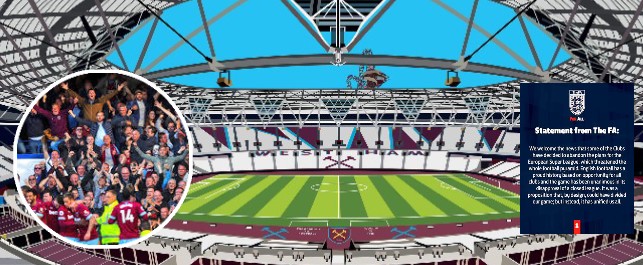
In the humid midsummer haze of late July, with the Championship season still weeks away and the wounds of relegation still raw across east London, the Football Association has at last delivered a decision that many at West Ham United had waited for with a mixture of dread and fragile hope. After months of investigations, hearings, submissions, and private discussions that stretched far beyond the final whistle of the 2025-26 Premier League campaign, the governing body has issued its formal verdict. The outcome, while carefully worded and measured in tone, has been seized upon by supporters, players and the new power structure at the London Stadium as a significant lifeline in the club’s determined push to return to the top flight at the first attempt.
West Ham’s relegation was confirmed on the final day of the season. A convincing 3-0 victory over Leeds United at the London Stadium proved irrelevant once Tottenham Hotspur secured the result they needed against Everton. Fourteen consecutive seasons in the Premier League came to an end. The financial hit was immediate and severe: reduced broadcasting revenue, lower commercial income, and a stadium rental arrangement that now costs London taxpayers even more as the club’s contribution falls under the relegation clause of the long-term deal. On the pitch the squad faced the familiar post-relegation uncertainty of key players attracting interest from clubs still in the Premier League. Off it, the ownership picture had become even more turbulent.
David Sullivan, the club’s largest shareholder with a 38.8 per cent stake, stepped down as co-chair and director in early June amid a joint investigation by the BBC and The Times that levelled serious historical allegations of sexually exploitative and predatory behaviour, all of which he has categorically denied. Those claims triggered fresh scrutiny from the Independent Football Regulator, which sought urgent information relating to his suitability under the owners’ and directors’ test. Parallel to that process sat the Football Association’s own long-running safeguarding inquiry, which had already resulted in restrictions on Sullivan’s contact with the club’s women’s and academy teams since 2023. The combination of public allegations, regulatory interest and the practical need for stable leadership created an atmosphere of prolonged uncertainty just when the club most needed clarity.
It is against that backdrop that the FA’s Independent Regulatory Commission completed its deliberations. The precise details of the charges, the evidence examined and the full written reasons will in due course be published in the usual way. What has been confirmed is that the Commission has declined to impose any further sporting sanction that would directly impede the club’s ability to compete for promotion, nor has it placed additional restrictions on the club’s operations that would have complicated the transfer window or the appointment of staff for the coming Championship campaign. In the carefully balanced language of governing-body statements, the FA has signalled that, while safeguarding standards remain non-negotiable and ongoing compliance will be monitored, the club itself is free to focus on footballing matters without the immediate threat of points deductions, transfer embargoes or other measures that could have turned a difficult season into a near-impossible one.
For a club already operating under the financial constraints of the second tier, that clarity matters enormously. Championship football is unforgiving. The fixture list is congested, the physical demands are high, and the financial disparity between the top and bottom of the division can be stark. West Ham enter the season with a squad still containing Premier League-calibre talent, a manager in Nuno Espírito Santo who retained the backing of the hierarchy despite the relegation, and the prospect of significant investment from the emerging majority influence of Daniel Křetínský’s group. The Czech businessman’s stake is set to rise to approximately 43 per cent following the agreement with the Gold family, making him the largest single shareholder. Joint voting arrangements on key matters have been outlined, with an explicit commitment to the strategy of an immediate return to the Premier League.
The FA’s verdict removes one of the major external variables that could have unsettled that plan. Had the Commission taken a harder line—imposing a points deduction that would have forced the team to chase promotion from a deficit, or restricting the club’s ability to register new players—the psychological and practical impact would have been severe. Instead, the decision has been interpreted inside the club as confirmation that the institution of West Ham United, distinct from the personal circumstances of any individual shareholder, retains its full competitive standing. That distinction is important. Supporters’ groups and the Fan Advisory Board have repeatedly stressed the need for the club to move forward as a collective entity rather than remaining defined by the controversies of recent months.
The path to this outcome was neither quick nor straightforward. The safeguarding investigation that began in 2023 had already established a framework of restrictions. The publication of the more recent allegations in June intensified public and political pressure. Culture Secretary Lisa Nandy described the claims as “utterly horrifying” and demanded explanations from both the FA and the club about how earlier concerns had been handled. The Independent Football Regulator’s parallel inquiries added another layer of oversight. Against that noise, the Regulatory Commission proceeded methodically, receiving written submissions, hearing representations, and weighing the evidence according to the FA’s established procedures. The length of the process itself became a source of frustration for those who wanted swifter resolution, yet it also reflected the seriousness with which the governing body approached matters that touch on both sporting integrity and the protection of vulnerable individuals within the game.
Inside the dressing room the reaction has been one of quiet relief. Players who remained after the relegation had already absorbed the disappointment of dropping out of the Premier League. The additional uncertainty surrounding ownership and potential regulatory sanctions risked becoming a distraction during pre-season. With the FA’s position now clear, the focus can shift entirely to the physical and tactical preparation required for a promotion challenge. Nuno Espírito Santo has spoken previously of the need for unity and resilience; those qualities will be tested across 46 league matches plus cup competitions. The presence of experienced campaigners alongside younger talents gives the squad a blend that many Championship observers rate highly, provided the off-field stability holds.
Financially the verdict also carries weight. Relegation already forced difficult decisions on the wage bill and transfer strategy. The knowledge that no additional sporting penalty is forthcoming allows the club’s executives to plan with greater certainty when negotiating sales, loans and incoming deals. Křetínský’s group has publicly committed to providing the additional financing required to support an immediate return. That commitment is more credible when the regulatory landscape is settled rather than contested. Sponsors, too, prefer clarity. Boyle Sports, the shirt sponsor, had already indicated it would continue the relationship into the Championship despite the relegation and the surrounding controversy; a clean regulatory outcome reduces the risk of further commercial complications.
Critics will argue that the FA’s decision does not amount to a full exoneration of every individual involved, nor does it erase the questions that remain about historical safeguarding practices. Those concerns are legitimate and will continue to be examined by the Independent Football Regulator and, where appropriate, by other authorities. The FA itself has reiterated that safeguarding remains a priority and that any future breaches will be treated with the utmost seriousness. Yet for the football club as a competitive entity, the practical effect of the verdict is to clear the immediate path. In the brutal arithmetic of the Championship, that clearance is valuable.
West Ham’s recent history is littered with moments when external decisions shaped their destiny. The move to the London Stadium, the Conference League triumph of 2023, the subsequent managerial changes, and the gradual erosion of form that led to relegation all form part of a complex narrative. The FA’s latest ruling does not rewrite that history. It does, however, offer the club a chance to write the next chapter without one particular cloud hanging over the first few pages. Promotion is never guaranteed. The Championship has destroyed the ambitions of richer and more experienced squads than this one. Yet the removal of a potential regulatory obstacle removes an avoidable source of disadvantage.
Supporters who filled the London Stadium through a difficult season, who watched the late drama against Arsenal when a potential equaliser was ruled out after lengthy VAR deliberation, and who then endured the final-day mathematics that confirmed relegation, now have a clearer target. The goal is simple and unforgiving: win enough matches to finish in the top two or navigate the play-offs successfully. The FA’s verdict does not score any of those goals. It does, however, ensure that the team begins the race from the same starting line as its rivals, without an artificial handicap imposed from outside the pitch.
In the statement that accompanied the decision, the FA emphasised the thoroughness of the process and the independence of the Commission. Those qualities are essential if the governing body’s authority is to retain credibility. Lengthy deliberations are rarely popular with those waiting for answers, but they are often necessary when the issues involved are serious and the potential consequences far-reaching. West Ham United, for their part, must now demonstrate that the lifeline has been grasped. Stability on the ownership side, clarity from the regulators, and a squad capable of competing at the required level form the foundation. Building upon it will require consistent performance, shrewd recruitment and the kind of collective resilience that was intermittently visible even in the darkest moments of last season.
The Premier League remains the destination. The Championship is the necessary proving ground. After months of uncertainty that stretched from the boardroom to the training ground, the FA has delivered a verdict that allows West Ham to treat the coming season as a footballing challenge rather than a multi-front crisis. That, in the context of everything the club has endured, constitutes a major lifeline. Whether it proves decisive will be settled not in regulatory hearings but on the pitches of the second tier, where the only deliberations that ultimately matter are those that produce three points.