
THOMAS TUCHEL REACTS AFTER FIFA CONFIRMS PUNISHMENT THAT RULES ENGLAND’S MOST VALUABLE PLAYERS OUT OF THE EUROS
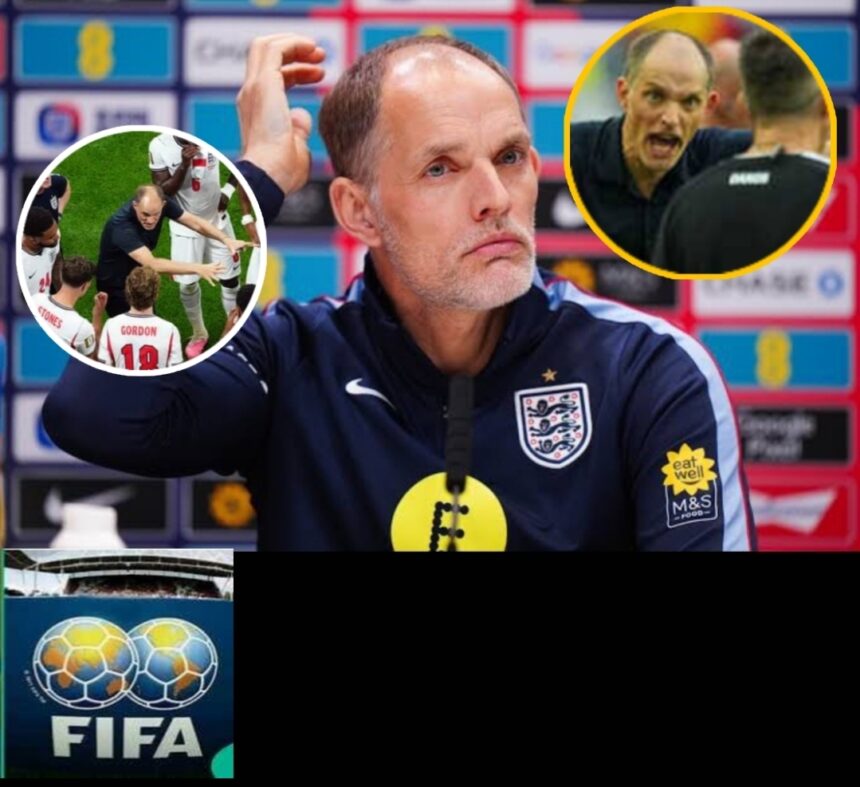
Thomas Tuchel stood in the press conference room with the familiar mix of controlled intensity and quiet disbelief that has become a hallmark of his time as England manager. The German coach had just been informed of FIFA’s latest disciplinary confirmation, a ruling that lands like a hammer blow on England’s preparations for the European Championship. In a decision that has already sent shockwaves through the national setup, the world governing body has upheld and expanded punishments that will keep several of the Three Lions’ most valuable and high-profile players out of the Euros.
Tuchel did not hide his frustration. Speaking shortly after the confirmation reached the England camp, he described the situation as one that raises fundamental questions about consistency, process and fairness in the modern game. “We work every day to build something coherent,” he said. “The players give everything. Then a decision arrives that removes key pieces from the board with almost no explanation. Where does this start and where does this end? We ask for clarity and we receive silence. That is difficult to accept.”
The punishment centres on a series of disciplinary findings linked to incidents that FIFA’s committee has classified under serious foul play and related breaches of the disciplinary code. The effect is immediate and severe. Multiple players who would otherwise form the spine of Tuchel’s plans for the home tournament are now unavailable. The list includes figures whose market value and on-pitch influence place them among the most important assets in the England squad. Their absence forces an immediate recalculation of tactics, leadership groups and long-term squad building.
For Tuchel the timing could scarcely be worse. England are already deep into the cycle that leads toward Euro 2028, a tournament the nation will co-host. The manager signed an extension that carries him through that home competition precisely because he believes there is still a higher level to reach. The latest FIFA ruling undercuts that project at a critical moment. “We have spoken many times about DNA, about control, about imposing ourselves,” Tuchel continued. “Those conversations become harder when the players you rely on most are simply not allowed to be there. It changes everything.”
Inside the camp the mood is one of controlled anger mixed with professional resignation. Senior figures have privately expressed bewilderment at the length and scope of the bans. The automatic suspension that normally accompanies a red card or serious misconduct has been extended in ways that feel punitive rather than proportionate. Players who expected to serve a single-match absence now find themselves ruled out of a far larger portion of the competitive calendar. For those whose value to the national team is measured in both performance and leadership, the loss is felt acutely.
Tuchel has always prided himself on adaptation. At club level he built success by reshaping systems around the available personnel. With England he has already shown a willingness to leave out established names when form or tactical fit demanded it. Yet this is different. This is not a selection decision. It is an external ruling that removes options before the manager can even begin to weigh them. “You prepare for injuries. You prepare for form dips. You do not prepare for a governing body to decide that some of your best players will not be available for the biggest tournament on the horizon,” he said.
The practical consequences are already being mapped. Defensive cover, midfield balance and attacking combinations that Tuchel had begun to solidify must now be rebuilt. Younger or less experienced players will be thrust into roles they might otherwise have grown into gradually. Leadership voices that steady the dressing room will be missing. The psychological impact on the remaining squad cannot be ignored either. When highly valued teammates are removed by a process that appears opaque, trust in the wider system is strained.
Tuchel has been careful not to attack individuals within FIFA. His criticism has focused on process. He wants consistency. He wants explanations. He wants a clear line that every team can understand and respect. In previous tournaments he watched similar decisions unfold with different outcomes for different nations and found the variation hard to reconcile. The latest confirmation only deepens that sense of uneven ground. “If the rules are the rules, then they must be applied the same way every time. When they are not, the players suffer and the competition suffers. That is what I cannot accept quietly.”
Supporters have reacted with a mixture of fury and weary familiarity. Social media filled quickly with calls for transparency and accusations of double standards. Many pointed to earlier episodes in which other teams appeared to receive more lenient treatment under comparable circumstances. The English public, already emotionally invested in a home Euros, now faces the prospect of watching their team without some of its brightest talents. The sense of injustice is palpable.
Within the Football Association there is quiet determination to support the manager and the players who remain available. Officials have lodged formal expressions of dissatisfaction and are exploring every available channel for further information. Yet the reality of FIFA’s authority in these matters is well understood. Appeals windows are narrow or non-existent once certain thresholds are crossed. The ruling stands.
Tuchel has already begun the work of reframing the challenge. In training sessions the emphasis has shifted toward collective responsibility and rapid integration of those who will step up. He has spoken to the affected players privately, offering support while making clear that the focus must remain on those who can still contribute. “The players who are banned are still part of this group,” he insisted. “Their absence is temporary in the larger picture, but the work continues. We will not use this as an excuse. We will use it as fuel.”
That stance is typical of the man. Throughout his career Tuchel has refused to dwell on obstacles he cannot control. At the same time he has never been shy about naming the problems he sees. The current situation tests both instincts. He must protect the morale of a squad that has already endured the emotional swings of a major tournament campaign, while also demanding better from the structures that govern the game.
Looking further ahead, the implications stretch beyond the immediate Euros cycle. Player development pathways, club-versus-country negotiations and the very attractiveness of international football for the next generation can all be affected when high-value talents are removed from the biggest stages by opaque processes. Sponsors and broadcasters take note of such disruptions. Fans feel the absence in the stands and on the screen. The sport as a whole loses when its most compelling performers are sidelined for reasons that remain incompletely explained.
Tuchel is realistic about the limits of his influence. He cannot overturn the decision. He can only respond to it. In the coming weeks and months he will reshape the England side around the available talent, accelerate the integration of emerging players, and continue to press, politely but firmly, for greater clarity from FIFA. His contract runs through the home tournament. He has stated repeatedly that he intends to fulfil it. The latest ruling does not change that commitment. It simply makes the task harder.
In private conversations with staff he has already outlined contingency plans. Different defensive structures. Alternative midfield balances. Greater reliance on versatility. The message to the players who remain is simple: this is the reality, and excellence is still expected. To those ruled out he has offered solidarity and the assurance that their place in the longer-term project is secure once the bans expire.
The broader football community is watching closely. Rival managers will study how England adapt. Governing bodies will note the public reaction. Players across the international game will wonder whether similar fates could await them. Consistency in discipline is not a minor administrative detail. It is a foundation of competitive integrity. When that foundation appears uneven, confidence erodes.
Tuchel closed his remarks with a characteristic blend of defiance and focus. “We cannot change what has been decided. We can change how we respond. The players who are here will give everything. The ones who are not will be supported. And we will keep asking the questions that need to be asked, because the game deserves better answers than silence.”
England’s path to the Euros has just become steeper. The most valuable pieces of the puzzle have been removed by a ruling that still lacks full transparency. Thomas Tuchel’s reaction makes clear that he will not accept the situation without challenge, even as he prepares to work within its constraints. The coming months will test his ability to rebuild, the squad’s resilience, and the willingness of football’s governing structures to provide the clarity the sport requires.
For now the focus remains on the pitch and the players who can still take the field. The absences will be felt. The questions will linger. And the manager who has made a career of turning adversity into structure will set about the difficult business of making England competitive once more under circumstances none of them chose. The Euros are still the target. The obstacles have simply multiplied. Tuchel’s response suggests he intends to meet them head on.